Introduction
A cold storage plant is more than a refrigerated room. It is a long-term investment that directly affects product quality, operating costs, and business profitability.
Whether you're storing fresh produce, dairy products, pharmaceuticals, seafood, or frozen foods, selecting the right system requires more than simply choosing a capacity. Factors such as refrigeration load, insulation quality, temperature control, and future expansion determine how efficiently the facility performs over its lifetime.
This guide explains the key factors businesses should evaluate before investing in a cold storage plant.
Start with Your Storage Requirements
The first step is understanding what needs to be stored.
Different products require different temperature and humidity conditions.
| Product | Typical Temperature |
|---|---|
| Fruits & Vegetables | 0°C to 10°C |
| Dairy Products | 2°C to 4°C |
| Pharmaceuticals | 2°C to 8°C |
| Frozen Foods | -18°C |
| Blast Freezing | -35°C to -40°C |
The storage volume should be calculated based on peak seasonal demand rather than average daily usage.
Choose Capacity Based on Load Calculations
Many businesses purchase systems based only on floor area.
Professional cold storage plants are designed around refrigeration load calculations, including:
- Product load
- Ambient heat gain
- Door opening frequency
- Lighting load
- Equipment heat
- Occupancy load
This ensures the refrigeration system is properly sized instead of being overpowered or undersized.
Select the Right Insulation
The insulation system significantly impacts energy consumption.
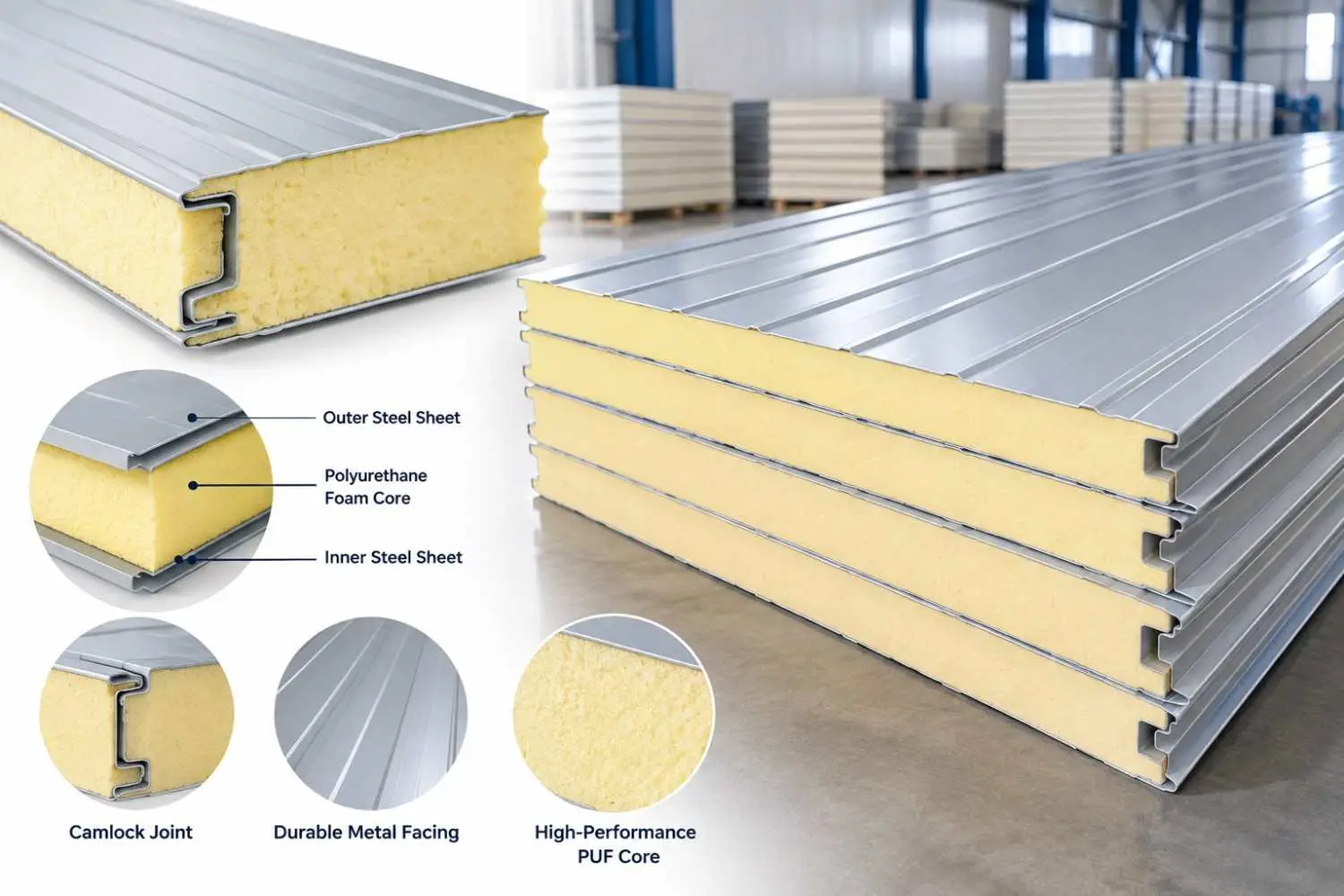
PUF Sandwich Panels
High-quality polyurethane foam panels provide:
- Excellent thermal insulation
- Structural strength
- Faster installation
- Airtight joints
- Long service life
Panel thickness typically ranges from 30 mm to 150 mm, depending on operating temperatures.
Consider Refrigeration System Efficiency
A reliable refrigeration system should deliver consistent cooling while minimizing power consumption.
Important components include:
- Condensing unit
- Evaporator unit
- Expansion valve
- Control panel
- Temperature monitoring
Efficient systems reduce operating costs over years of operation.
Plan for Future Expansion
Many businesses outgrow their first cold storage facility.
A modular design allows future expansion without replacing the entire system.
Consider:
- Additional storage chambers
- Higher refrigeration capacity
- New product categories
- Increased daily throughput
Don't Ignore Temperature Monitoring
Modern facilities increasingly use digital monitoring for better control.
Useful features include:
- Digital temperature displays
- High/low temperature alarms
- Data logging
- Remote monitoring
- Humidity control
These features help maintain product quality and improve operational visibility.
Industry-Specific Solutions
Different industries require different system configurations.
Agriculture
- Seasonal crop storage
- Post-harvest preservation
- Reduced spoilage
Food Processing
- Cold rooms
- Blast freezers
- Frozen storage
Dairy
- Milk cooling
- Chilled storage
- Consistent temperature control
Pharmaceuticals
- Controlled environments
- Reliable temperature stability
- Product safety
Common Mistakes to Avoid
Businesses often make avoidable mistakes when purchasing cold storage systems.
- Choosing capacity based only on room size
- Ignoring insulation quality
- Buying oversized compressors
- Skipping load calculations
- Planning no room for future expansion
Avoiding these issues can improve both performance and long-term operating efficiency.
Conclusion
The right cold storage plant should match your product requirements, operational workflow, and future growth plans.
A professionally engineered system—designed around refrigeration load calculations, high-quality PUF insulation, and efficient cooling equipment—can help businesses reduce energy costs, protect inventory, and improve long-term reliability.
For businesses planning a new cold storage project, taking time to evaluate these factors before installation can lead to better performance for years to come.
Frequently Asked Questions
What is the ideal temperature for a cold storage plant?
It depends on the product. Fresh produce typically requires 0–10°C, while frozen products are stored around -18°C.
What thickness of PUF panel is suitable for cold storage?
PUF panels generally range from 30 mm to 150 mm depending on the required operating temperature.
How is cold storage capacity calculated?
Capacity should be based on refrigeration load calculations that consider product load, heat gain, equipment load, and operational conditions.
Can a cold storage plant be expanded later?
Yes. Modular systems allow businesses to increase capacity without replacing the entire installation.