Introduction
For commercial fruit businesses, ripening is not simply waiting for fruit to turn yellow. It is a carefully controlled biological process that directly affects appearance, sweetness, texture, shelf life, and market value.
Traditional ripening methods often produce inconsistent results. Some fruits over-ripen, others remain green, and uneven batches create unnecessary losses during transportation and retail display.
Ethylene ripening chambers solve this problem by creating a controlled environment where fruits ripen uniformly under scientifically managed conditions. By regulating ethylene concentration, temperature, humidity, and airflow, these chambers help businesses achieve consistent quality while reducing spoilage.
Whether you're handling bananas, mangoes, papayas, avocados, or tomatoes, understanding how these systems work can help improve operational efficiency and product quality.
What Is an Ethylene Ripening Chamber?
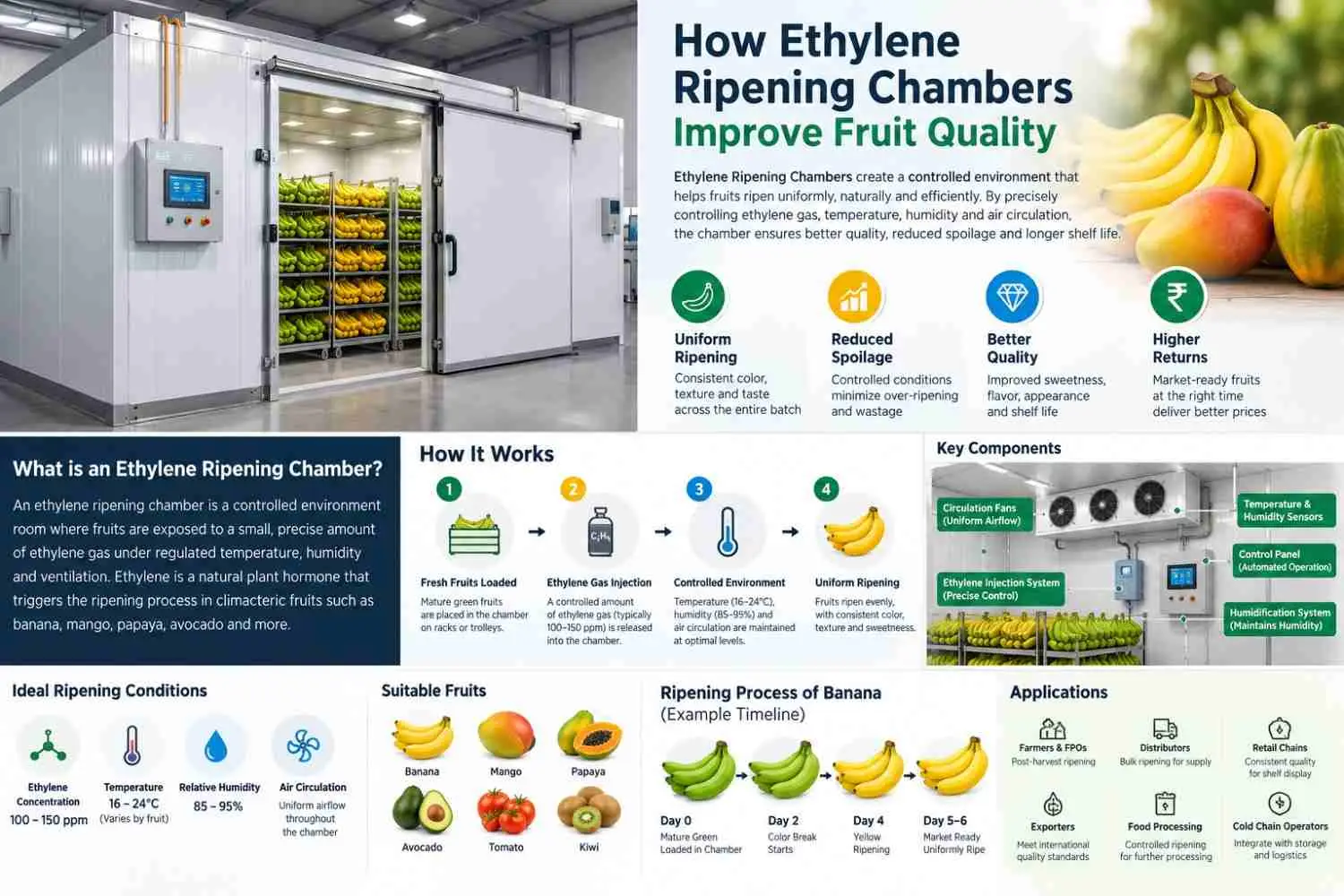
An ethylene ripening chamber is a specially designed insulated room where fruits are exposed to a controlled amount of ethylene gas, a naturally occurring plant hormone that triggers ripening in climacteric fruits.
Unlike uncontrolled ripening in open warehouses, the chamber maintains stable environmental conditions throughout the process.
A typical ripening chamber includes:
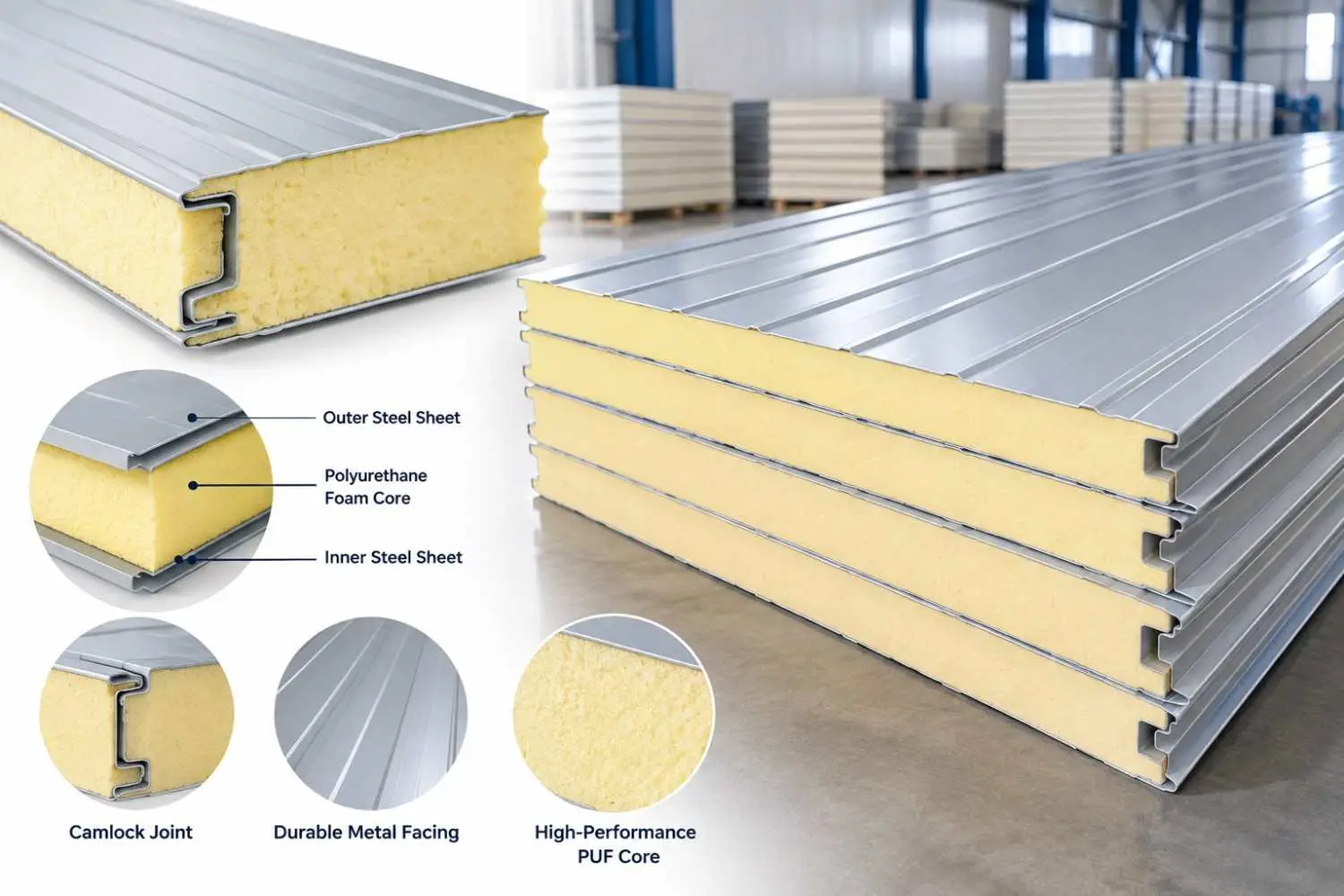
- Insulated PUF panel enclosure
- Refrigeration system
- Humidification system
- Air circulation fans
- Ethylene gas dosing system
- Digital control panel
- Temperature and humidity sensors
Together, these components create repeatable ripening conditions for every batch.
Understanding Ethylene: The Natural Ripening Hormone
Ethylene is a naturally produced plant hormone responsible for initiating the ripening process in many fruits.
As climacteric fruits mature, they begin producing ethylene internally. Commercial ripening chambers carefully introduce controlled levels of ethylene to synchronize this natural process across the entire batch.
Climacteric fruits include:
- Banana
- Mango
- Papaya
- Avocado
- Tomato
- Pear
- Kiwi
Because the hormone already exists naturally, commercial chambers accelerate and standardize the ripening process rather than artificially changing the fruit.
How an Ethylene Ripening Chamber Works
The ripening process follows a carefully managed sequence.
Step 1: Loading the Fruit
Fruits are placed on racks, pallets, or trolleys with enough spacing for uniform airflow.
Proper loading prevents blocked air circulation.
Step 2: Ethylene Gas Introduction
A controlled amount of ethylene gas is released into the chamber.
Typical commercial concentrations range between:
100–150 ppm100\text{–}150\ \text{ppm}100–150 ppm
The exact concentration depends on the fruit variety and ripening objective.
Step 3: Temperature Control
The refrigeration system maintains an optimal temperature throughout the cycle.
| Fruit | Typical Ripening Temperature |
|---|---|
| Banana | 16–18°C |
| Mango | 18–24°C |
| Papaya | 20–25°C |
| Avocado | 18–22°C |
Stable temperatures prevent uneven ripening.
Step 4: Humidity Management
Relative humidity is usually maintained around:
85–95%85\text{–}95\%85–95%
This helps reduce moisture loss and preserves fruit appearance.
Step 5: Air Circulation
Circulation fans distribute:
- Ethylene gas
- Cool air
- Humidity
Uniform airflow ensures every fruit receives similar conditions.
Why Controlled Ripening Produces Better Fruit
Open-room ripening creates unpredictable conditions.
Ethylene chambers produce measurable improvements.
Uniform Color Development
Without controlled conditions, bananas may develop green patches while others become overripe.
Chambers help produce:
- Even yellowing
- Consistent appearance
- Better retail presentation
Better Sweetness
During ripening, starch converts into sugar.
Controlled ripening allows this conversion to occur more evenly, improving taste consistency.
Improved Texture
Proper environmental control helps maintain:
- Firmness
- Smooth texture
- Reduced bruising
This is especially important during transportation.
Longer Market Shelf Life
Uniform ripening allows retailers to display fruit for longer without excessive losses.
The Science Behind the Ripening Process
Inside the fruit, several biological changes occur.
Starch Converts to Sugar
As ripening progresses:
- Starch decreases.
- Sugar increases.
- Flavor becomes sweeter.
Chlorophyll Breaks Down
Green pigments gradually disappear.
This allows yellow, orange, or red pigments to become visible.
Aroma Compounds Develop
Ripening increases:
- Natural aroma
- Flavor complexity
- Consumer appeal
Cell Walls Soften
Enzymes slowly soften the fruit, improving eating quality while controlled conditions prevent excessive softening.
Ideal Operating Conditions
Different fruits require different settings.
| Parameter | Typical Range |
|---|---|
| Ethylene | 100–150 ppm |
| Temperature | 16–24°C |
| Humidity | 85–95% |
| Airflow | Uniform circulation |
| Monitoring | Continuous |
The exact values depend on the fruit variety and commercial requirements.
Key Components of a Commercial Ripening Chamber
PUF Insulated Panels
High-quality insulation helps maintain stable internal temperatures while reducing refrigeration energy consumption.
Benefits include:
- Excellent thermal insulation
- Airtight construction
- Faster installation
Refrigeration System
The refrigeration unit keeps temperatures within the required operating range throughout the cycle.
Air Circulation Fans
Fans distribute air evenly, preventing hot or cold spots.
Humidification System
Maintains proper moisture levels and reduces dehydration.
Digital Control Panel
Operators can monitor:
- Temperature
- Humidity
- Ethylene cycles
- Operating status
Banana Ripening Timeline
Bananas provide one of the best examples of controlled ripening.
| Day | Stage |
|---|---|
| Day 0 | Mature green fruit loaded |
| Day 1 | Ethylene treatment begins |
| Day 2 | Color break starts |
| Day 3 | Yellow color develops |
| Day 4 | Uniform ripening |
| Day 5 | Market-ready fruit |
Actual timelines vary depending on variety and operating conditions.
Benefits for Different Businesses
Farmers
- Better post-harvest management
- Reduced losses
- Improved selling prices
Distributors
- Consistent batches
- Easier logistics planning
- Improved customer satisfaction
Retail Chains
- Better shelf presentation
- Longer display life
- Reduced waste
Export Businesses
Controlled ripening helps maintain quality during international distribution.
Common Fruits Suitable for Ethylene Ripening
Commercial chambers are widely used for:
- Bananas
- Mangoes
- Papayas
- Avocados
- Pears
- Tomatoes
- Kiwis
Each fruit requires specific operating conditions for optimal results.
Why Airflow Is More Important Than Many People Realize
Many businesses focus only on ethylene concentration.
Air circulation is equally important.
Poor airflow can create:
- Uneven temperatures
- Localized humidity differences
- Inconsistent ripening
Professional chamber design ensures balanced airflow throughout the storage area.
Energy Efficiency in Modern Ripening Chambers
Well-designed systems improve operational efficiency through:
- High-performance PUF insulation
- Efficient refrigeration equipment
- Digital controls
- Reduced cooling losses
- Better door sealing
These improvements help reduce operating costs over time.
Common Mistakes to Avoid
Businesses can reduce performance by making avoidable mistakes.
Overloading the Chamber
Blocked airflow creates uneven ripening.
Poor Temperature Control
Temperature fluctuations can delay or accelerate ripening unpredictably.
Low Humidity
Dry air increases moisture loss and affects fruit appearance.
Incorrect Ethylene Dosage
Too much or too little ethylene can reduce batch consistency.
Inadequate Ventilation Management
Proper ventilation cycles are important for maintaining balanced chamber conditions.
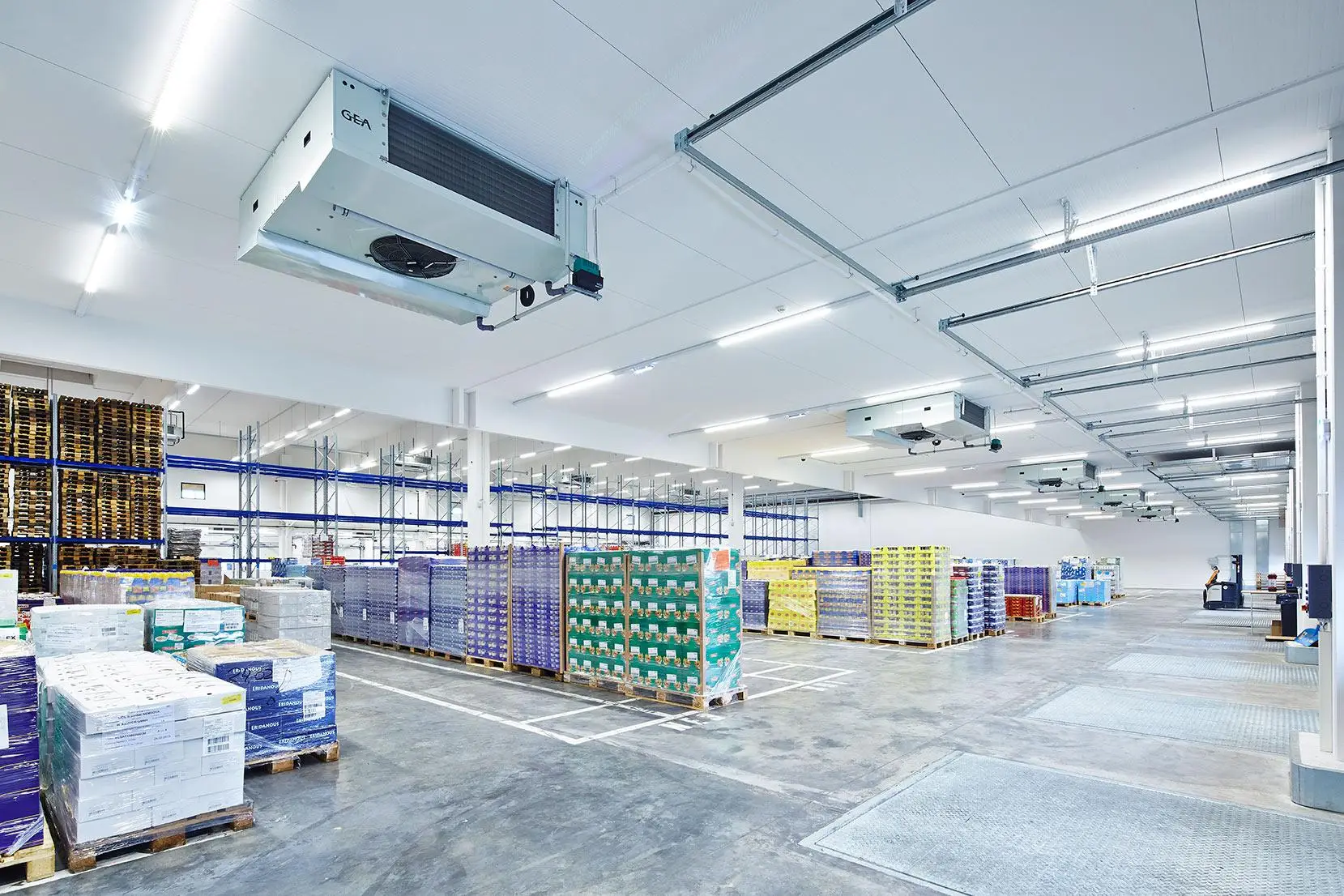
Why Commercial Ripening Chambers Matter for the Cold Chain
Ripening chambers are not isolated equipment—they are an important part of the cold chain.
They connect:
- Harvest
- Storage
- Transportation
- Distribution
- Retail
A well-managed ripening process helps businesses deliver products that meet market expectations while reducing unnecessary waste.
Frequently Asked Questions
Is ethylene gas safe for commercial fruit ripening?
Ethylene is a naturally occurring plant hormone. Commercial systems use controlled concentrations specifically designed for fruit ripening.
ich fruits require ethylene ripening?
Common climacteric fruits include bananas, mangoes, papayas, avocados, pears, tomatoes, and kiwis.
Why is humidity important during ripening?
Humidity helps reduce moisture loss, preserves appearance, and supports consistent ripening.
What temperature is best for banana ripening?
Commercial banana ripening typically occurs around 16–18°C, although exact settings depend on operational requirements.
How long does commercial ripening take?
Most commercial ripening cycles range from 3 to 7 days, depending on fruit type, maturity, and operating conditions.
Conclusion
Ethylene ripening chambers transform fruit ripening from an unpredictable process into a controlled commercial operation. By carefully regulating ethylene concentration, temperature, humidity, and airflow, these systems help businesses produce uniform batches, reduce spoilage, improve shelf life, and maintain consistent quality.
For growers, distributors, retailers, exporters, and food processing businesses, investing in a properly engineered ripening chamber is not just about faster ripening—it's about delivering reliable product quality while improving operational efficiency across the entire supply chain